Art Integration Project A Deep Dive Into The Economic Life Of People Preface This Project Explores The
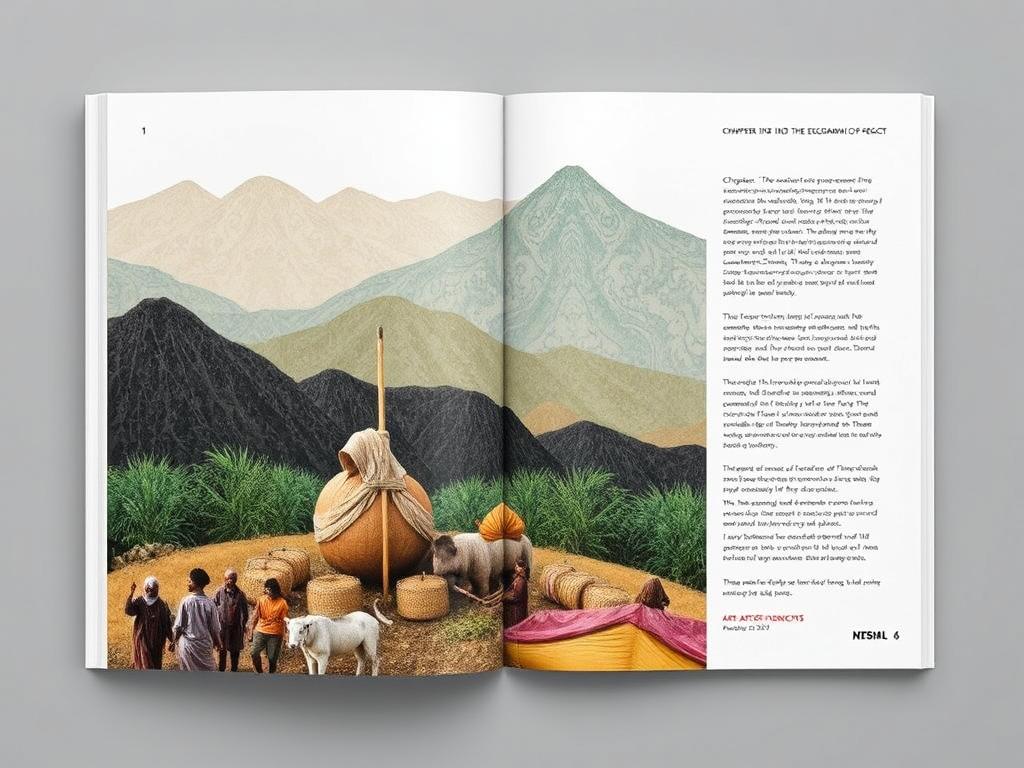
Art Integration Project: A Deep Dive into the Economic Life of People Preface This project explores the intricate relationship between human society and its economic activities. It delves into the diverse ways in which people have earned their livelihoods, from ancient subsistence-based systems to the complex, interconnected global economies of today. Through a comparative study of various regions and historical periods, this work aims to highlight how economic life shapes culture, social structures, and individual identities. By integrating art, history, and social science, this document serves as a comprehensive resource on the foundational principles and evolving nature of economic existence. Table of Contents Chapter 1: The Foundations of Economic Life 1.1 Defining Economic Life: Beyond Money 1.2 The Scarcity Principle and Human Needs 1.3 The Evolution of Economic Activities 1.3.1 Hunter-Gatherer Societies: Subsistence and Sharing 1.3.2 The Agrarian Revolution: From Nomads to Settlers 1.3.3 The Industrial Revolution: Machines and Mass Production 1.3.4 The Information Age: Knowledge and Services 1.4 The Art of Livelihood: An Introduction to Economic Art Forms Chapter 2: The Sectors of the Economy 2.1 The Primary Sector: The Foundation of Society 2.2 The Secondary Sector: The Engine of Growth 2.3 The Tertiary Sector: The Rise of the Service Economy 2.4 The Quaternary and Quinary Sectors: The Future of Work Chapter 3: The Role of Economic Systems 3.1 Capitalism: The Free Market 3.2 Socialism: The Planned Economy 3.3 Mixed Economies: A Global Reality 3.4 Understanding Economic Indicators: GDP, GNP, and HDI Chapter 4: A Global Comparative Study: Economic Life Across Continents 4.1 The Developed World: The United States 4.1.1 Demographics and Workforce 4.1.2 Key Industries and Economic Drivers 4.1.3 Income Inequality and Social Challenges 4.2 The Developing World: Brazil 4.2.1 Economic Strengths and Diversification 4.2.2 Challenges of Poverty and Urbanization 4.2.3 The Role of Agriculture and Manufacturing 4.3 A Traditional Economy: The Maasai of Kenya 4.3.1 Pastoralism and Communal Living 4.3.2 Livelihood and Cultural Practices 4.3.3 The Impact of Modernization Chapter 5: Economic Life and Cultural Expression 5.1 The Art of Subsistence: Indigenous Art and Livelihoods 5.2 The Craft Economy: Artisans, Handlooms, and Handicrafts 5.3 Festivals and the Local Economy: A Case Study of India 5.4 The Digital Economy's Impact on the Arts Chapter 6: The Future of Economic Life 6.1 The Gig Economy: Flexibility vs. Instability 6.2 The Rise of Automation and Artificial Intelligence 6.3 Climate Change and the Green Economy 6.4 The Pursuit of Sustainable and Equitable Growth Chapter 7: Conclusion: A Synthesis of Economy, Society, and Art 7.1 Review of Key Findings 7.2 The Interconnectedness of Economic Life 7.3 Final Thoughts and Recommendations Chapter 1: The Foundations of Economic Life 1.1 Defining Economic Life: Beyond Money The term "economic life" is often mistakenly simplified to mean just money or employment. In reality, it is a much broader concept that encompasses every activity people undertake to survive and thrive. It is the way in which a society organizes itself to produce, distribute, and consume the goods and services necessary to meet its needs and desires. This includes everything from a farmer tilling the soil to a software engineer writing code, and from a teacher educating students to a street vendor selling food. At its core, economic life is a study of human behavior, shaped by geography, culture, history, and technology. It is a system of relationships, trade-offs, and decisions that define our daily existence and our place in the world. 1.2 The Scarcity Principle and Human Needs A fundamental principle of all economic life is scarcity. Resources, such as land, labor, and capital, are limited, while human wants and needs are virtually unlimited. This basic conflict forces individuals and societies to make choices about how to allocate their resources. What to produce? How to produce it? And for whom? These are the three central questions of economics. The way a society answers these questions determines its economic system and, consequently, the economic life of its people. Scarcity drives innovation, trade, and competition, shaping everything from the rise of agriculture to the development of complex financial markets. 1.3 The Evolution of Economic Activities Human economic life has evolved through several distinct phases, each marked by a fundamental shift in how resources were acquired and managed. 1.3.1 Hunter-Gatherer Societies: Subsistence and Sharing For most of human history, people lived as hunter-gatherers. Their economic life was centered on subsistence, with all resources being acquired directly from nature. This was a communal economy where goods were shared to ensure the survival of the group. There was little to no concept of private property or surplus accumulation. The division of labor was basic, often based on gender and age. This era was defined by a close relationship with nature and a focus on immediate needs. 1.3.2 The Agrarian Revolution: From Nomads to Settlers Around 10,000 BCE, humanity's economic life was fundamentally changed by the Agrarian Revolution. The discovery of agriculture and the domestication of animals allowed people to produce their own food. This led to a sedentary lifestyle, the birth of permanent settlements, and the creation of a food surplus. The surplus enabled the specialization of labor, giving rise to new occupations like artisans, priests, and soldiers. The concept of land ownership and private property emerged, laying the groundwork for social hierarchies and more complex economic systems. 1.3.3 The Industrial Revolution: Machines and Mass Production Beginning in the late 18th century, the Industrial Revolution was a paradigm shift from an agrarian to an industrial economy. The invention of the steam engine and new machinery led to mass production in factories. This era saw a mass migration from rural areas to cities, the rise of the factory system, and the creation of a new class structure: capitalists and laborers. While it brought unprecedented economic growth and technological advancement, it also created new social challenges, including harsh working conditions and a widening gap between the rich and the poor. 1.3.4 The Information Age: Knowledge and Services The late 20th century ushered in the Information Age, driven by advancements in computing and telecommunications. This shift moved the economy from a focus on goods production to knowledge and services. The digital economy, gig economy, and the rise of multinational corporations are all hallmarks of this new era. The value of information and intellectual property has become paramount, transforming how people work, communicate, and trade. 1.4 The Art of Livelihood: An Introduction to Economic Art Forms Economic life is not just a science of numbers; it is an art of survival and expression. Throughout history, the way people have earned their living has been reflected in their art. From cave paintings depicting hunts to modern art installations on consumerism, art serves as a mirror of economic life. This project will explore how traditional crafts, folk music, and even modern digital art forms are not only expressions of culture but also vital parts of the economy, providing livelihoods and defining cultural identity. The art of a society is inseparable from its economic soul.
19.08.2025 15:09