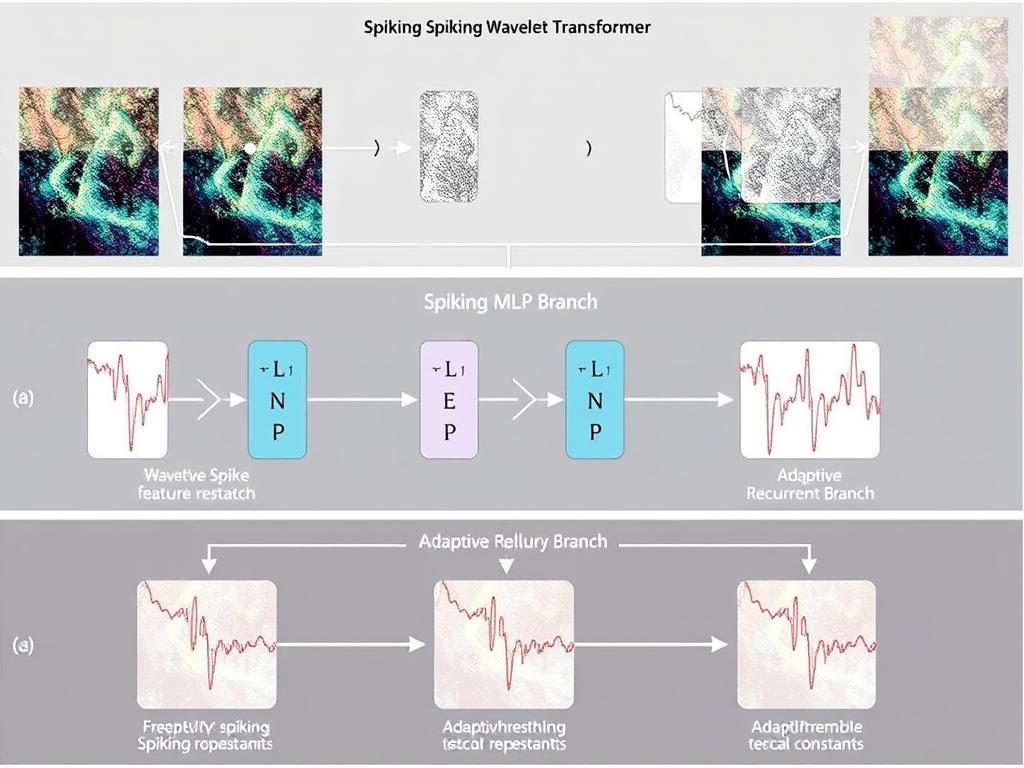
Figure X | Proposed Adaptive Spiking-Wavelet Transformer (ASWformer) The ASWformer Extends The SWformer
Figure X | Proposed Adaptive Spiking-Wavelet Transformer (ASWformer). The ASWformer extends the SWformer architecture (Fang et al., 2025) by replacing conventional spiking neurons with Adaptive Spiking Recurrent Neurons (ASRNs) (Yin et al., 2021), enabling enhanced temporal learning and memory. The network begins with a Spiking Patch Splitting (SPS) module, which divides the input into patches via initial spiking convolution layers. These patches are processed by multiple Spiking Encoder Blocks, each containing a modified Frequency-Aware Token Mixer (FATM) for multi-scale feature extraction using spiking frequency representations, followed by a Spiking MLP block, with three parallel branches: (i) Wavelet-Spike Branch – extracts spiking wavelet features with negative spike dynamics, (ii) Adaptive Recurrent Branch – ASRNs capture temporal dependencies through adaptive thresholds and tunable decay constants, and (iii) Conv-Spike Branch – spiking pointwise convolutions perform channel fusion. Residual connections propagate membrane potentials across blocks. Features are aggregated via Global Average Pooling (GAP) and passed to a fully-connected Classification Head (CH) for final prediction Y. ASRNs operate similarly to ALIF neurons, with internal states evolving over time and spikes emitted when membrane potentials cross adaptive thresholds. The architecture allows efficient spatio-temporal feature extraction, multi-scale representation, and sequence-aware learning, integrating concepts from classical SNN computation, recurrent spiking dynamics, and surrogate gradient optimization.
04.11.2025 07:33
Related Images