L-Phenylalanine → Coumaroyl-CoA (PAL CHS CHI) The Pathway Starts When The Amino Acid L-phenylalanine
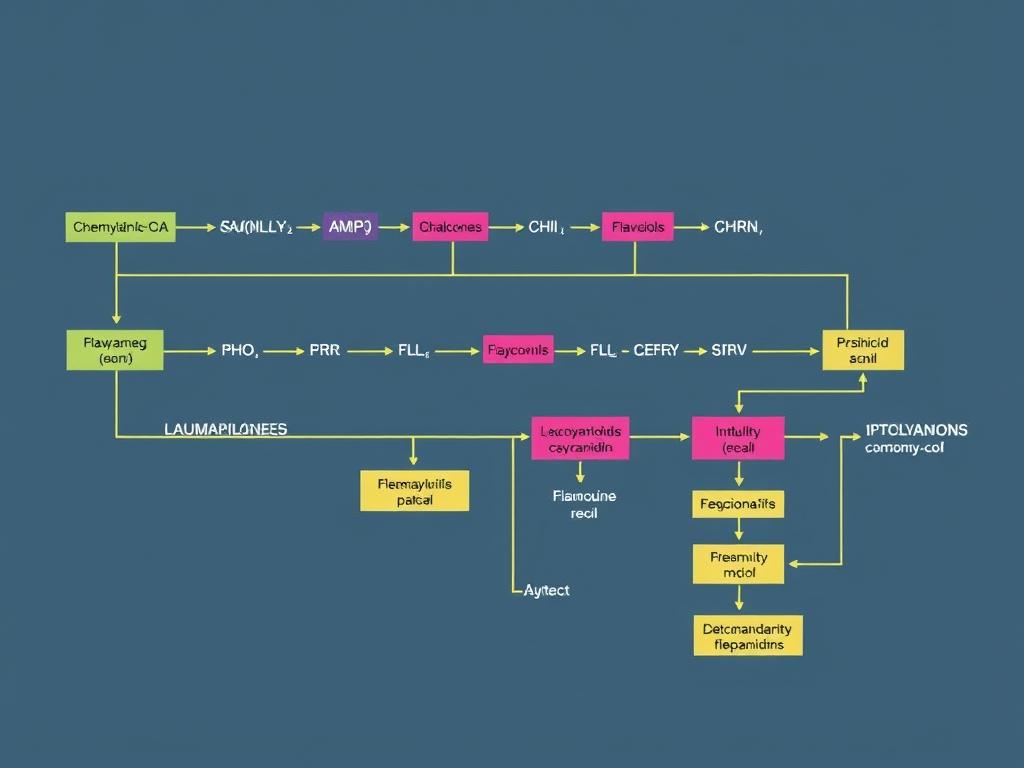
L-Phenylalanine → Coumaroyl-CoA (PAL, CHS, CHI) The pathway starts when the amino acid L-phenylalanine is converted into coumaroyl-CoA, producing the basic building block for all flavonoids. Coumaroyl-CoA → Chalcones → Flavanones CHS forms chalcones, which are then rearranged by CHI into flavanones, the central precursors for all downstream branches. Flavanones → Flavonols (via FLS) Some flavanones are converted by FLS into flavonols, a separate flavonoid class used for antioxidant and UV-protection functions. Flavanones → Dihydroflavonols → Leucoanthocyanidins (DFR) Other flavanones are converted into dihydroflavonols, which DFR reduces into leucoanthocyanidins, the immediate precursors of colored anthocyanins. Leucoanthocyanidins → Anthocyanidins → Anthocyanins (UFGT) Leucoanthocyanidins are transformed into anthocyanidins, and UFGT attaches a glucose molecule to form stable anthocyanins. Modification of Anthocyanins (OMT, GT, AT) Anthocyanins undergo methylation, glycosylation, and acylation, producing different pigments: Cyanidin → Peonidin Delphinidin → Petunidin → Malvidin These modifications change flower or tissue color (blue–purple, red, amaranth). Transport to Vacuole (GSTs, MATE, ABCC) Newly synthesized anthocyanins are transported into the vacuole by GST, MATE, and ABCC transporters, where they accumulate and give visible color. Regulation (MYB–bHLH–WD40 + Hormones + Environment) Plant hormones and environmental signals activate the MYB–bHLH–WD40 complex, which upregulates early biosynthetic genes and controls the entire pathway.
26.11.2025 00:59
Related Images