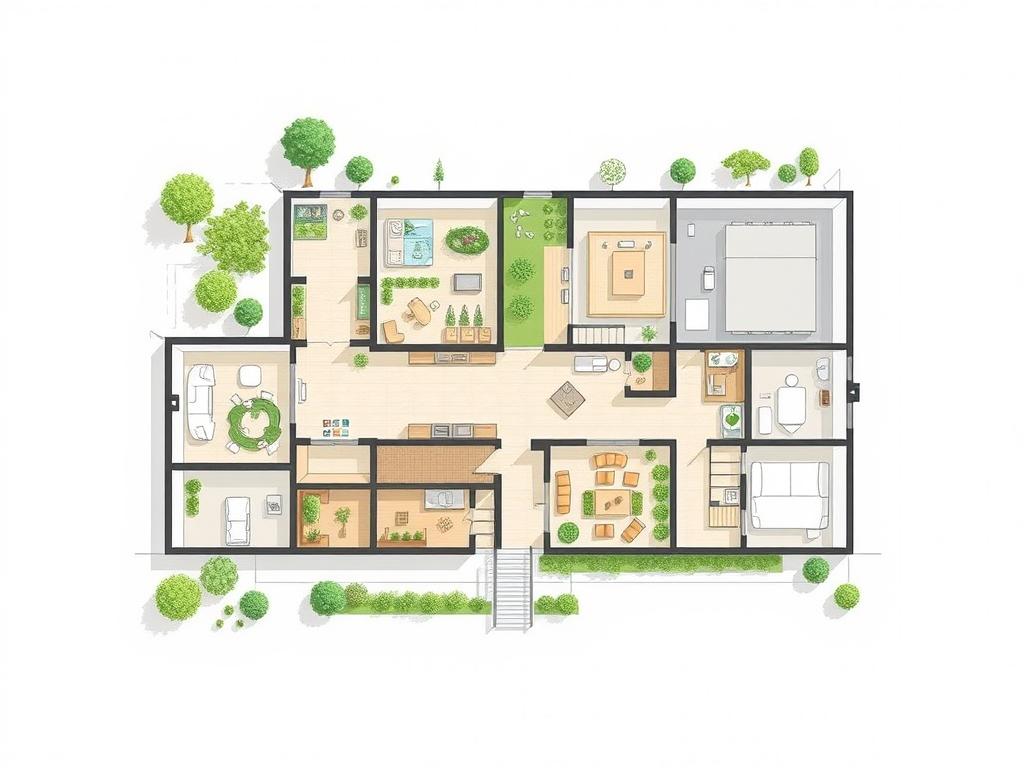
Make A Floor Plan Base On The Instruction Below **Overall Concept** The Building Is Designed As A Community
make a floor plan base on the instruction below **Overall Concept:** The building is designed as a community hub promoting sustainable living, education, and collaboration. It incorporates green building materials, energy-efficient systems, and community-focused spaces. **Scale Reminder:** At a scale of 1:100, 1 cm on your drawing equals 1 meter in real life. So, a 500 sq. m building could be represented by a 50 cm x 100 cm rectangle on your plan. ## Floor-by-Floor Breakdown ### Ground Floor (Community Engagement & Education) * **Area:** Approximately 150 sq. m * **Layout:** * **Entrance/Reception (20 sq. m):** A welcoming area with information about the building's sustainable features. * **Exhibition Space (40 sq. m):** Displaying information on sustainable urban development, local eco-initiatives, and community projects. * **Workshop/Classroom (50 sq. m):** A flexible space for workshops, lectures, and community meetings focused on sustainability topics (gardening, recycling, energy conservation, etc.). * **Café/Community Kitchen (40 sq. m):** A small café serving locally sourced, organic food, promoting sustainable eating habits and providing a space for informal gatherings. Includes a small community kitchen area for cooking workshops. * **Sustainable Features:** * **Green Wall:** A vertical garden in the reception area to improve air quality and create a connection with nature. * **Recycled Materials:** Use of reclaimed wood, recycled concrete, or other sustainable materials in the flooring and wall finishes. * **Natural Light:** Large windows to maximize natural light and reduce the need for artificial lighting. ### First Floor (Co-working & Innovation) * **Area:** Approximately 150 sq. m * **Layout:** * **Open Co-working Space (70 sq. m):** A flexible workspace with desks, chairs, and power outlets for freelancers, entrepreneurs, and community members working on sustainability-related projects. * **Meeting Room (30 sq. m):** A bookable meeting room for team collaborations, presentations, and private discussions. * **Maker Space/Fab Lab (50 sq. m):** A small workshop equipped with tools and equipment for prototyping and creating sustainable solutions (3D printer, laser cutter, basic hand tools). * **Sustainable Features:** * **Energy-Efficient Lighting:** LED lighting with occupancy sensors to reduce energy consumption. * **Sustainable Furniture:** Use of furniture made from recycled materials or sustainably sourced wood. * **Modular Design:** Flexible layout that can be easily adapted to changing needs. ### Second Floor (Residential & Green Living) * **Area:** Approximately 100 sq. m (smaller footprint to allow for a rooftop garden on the floor below) * **Layout:** * **Two Small Apartments (40 sq. m each):** Designed as model sustainable living units, showcasing eco-friendly appliances, water-saving fixtures, and smart home technology. * **Communal Lounge (20 sq. m):** A shared living space for residents to relax and socialize. * **Sustainable Features:** * **Solar Panels:** Installation of solar panels on the roof to generate renewable energy. * **Rainwater Harvesting:** A system to collect rainwater for use in toilets and irrigation. * **Smart Home Technology:** Integration of smart home devices to monitor and optimize energy and water consumption. ### Roof * **Area:** Approximately 150 sq. m * **Layout:** * **Rooftop Garden:** An urban garden with raised beds for growing vegetables, herbs, and flowers. * **Composting Area:** A designated area for composting organic waste from the building. * **Outdoor Seating:** A space for relaxation and enjoying the views. * **Sustainable Features:** * **Green Roof:** Planting vegetation on the roof to reduce heat absorption, improve insulation, and manage stormwater runoff. * **Pollinator Garden:** Planting flowers and plants that attract bees, butterflies, and other pollinators to support biodiversity.
01.12.2025 14:42
Related Images